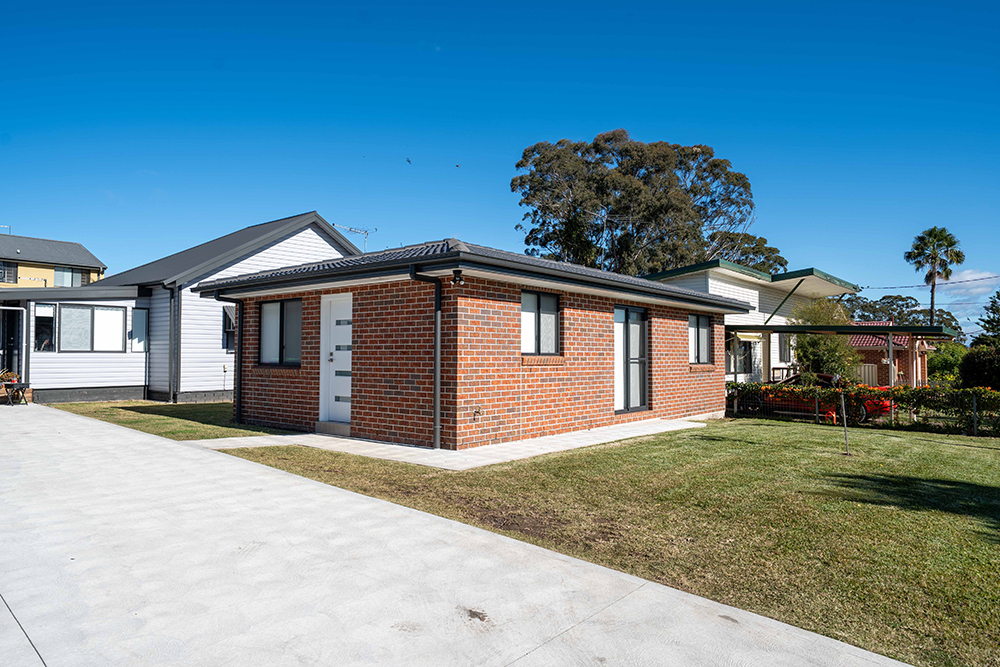
Rental returns of $500 to $600 per week. That's what a well-positioned granny flat in Western Sydney is pulling right now. For a lot of homeowners, that kind of passive income is sitting untapped at the back of their property, and they don't even know it.
The question isn't whether granny flats are a good investment. That's settled. The question is whether your specific block is actually eligible, and if so, how quickly you can make it happen.
Here's the thing, most people assume their property won't qualify. Or they call council, get put on hold, and give up. Others spend hours on the NSW Planning Portal trying to decode zoning maps that weren't built for regular people to understand.
There's a better way to approach this.
Not all blocks are equal. Zoning, lot size, frontage, overlays, and setbacks all play a role in whether a granny flat gets approved under Complying Development (fast-track) or requires a full Development Application. Understanding your situation upfront saves you weeks.
What Makes a Sydney Block Eligible?
NSW has clear rules under the State Environmental Planning Policy (SEPP) for what's called Complying Development, or CDC for short. This is the fast-track approval pathway that bypasses the full council DA process and can get your build underway significantly faster.
To qualify under CDC, your property generally needs to meet all of the following:
CDC Eligibility Checklist
Your property needs to tick all of these boxes for Complying Development approval.
- Minimum lot size of 450m²
- R2 Low Density Residential zoning
- Minimum 12m street frontage
- 3m rear boundary setback
- 0.9m side boundary setback
- No flood or bushfire overlay
- Existing dwelling on the property
- Trees over 6m require 3m clearance
Tick all of those boxes, and you're looking at Complying Development, which means a private certifier handles the approval, not council. That alone can shave weeks off your timeline and remove a significant amount of uncertainty from the process.
Battle Axe Blocks – The Special Case Most People Miss
Battle axe blocks are one of those situations where the standard checklist doesn't quite tell the whole story. These are properties with a narrow access handle leading to a larger block at the rear, typically without direct street frontage in the traditional sense.
They're common across Western Sydney suburbs like Penrith, Blacktown, and the Hills District, and they're often written off by owners who assume the unusual shape makes granny flat development impossible. That's not always true.
The catch is that battle axe blocks have additional rules around the access handle, rear area calculations, and how frontage is measured. A block that looks too small on paper can still clear all the controls when assessed correctly. And one that looks generous can fail if the handle doesn't meet the width requirement.
Standard Rectangular Block
The most straightforward assessment. Frontage and setbacks are clear-cut. Usually fastest to confirm under CDC.
Battle Axe Block
Additional handle width rules apply. Rear access and area calculations differ. Needs proper assessment, but often still eligible.
Irregular Shaped Block
Corner lots, curved boundaries, or tapered blocks. Setbacks can work in your favour or limit build area depending on orientation.
Sloped Block
Grade affects cost and engineering requirements but doesn't automatically disqualify a build. The slope needs to be assessed against cut-and-fill controls.
"The blocks people assume won't qualify are often the ones with the most untapped potential."
What About Properties That Don't Qualify Under CDC?
Not qualifying for Complying Development doesn't mean the door is closed. It means you're looking at a Development Application (DA) through your local council instead.
A DA takes longer, typically 3 to 6 months depending on your council, and involves more documentation. But it opens the door to non-standard builds, larger sites with specific constraints, and properties in zones where CDC doesn't apply.
The important thing is knowing which pathway applies to you before you start making plans. Going down the wrong track wastes time and money.
What Else Gets Assessed During a Site Check?
Drainage and stormwater
Existing drainage patterns and any requirement for additional infrastructure.
Services access
Water, sewer, and electricity connections and how a secondary dwelling taps into them.
Site slope and excavation
Any cut and fill required, plus its impact on cost and retaining wall needs.
Protected trees
Trees on or near the build area that are subject to council preservation orders.
Bushfire Attack Level (BAL)
Properties on the urban fringe may carry BAL requirements that affect construction specs.
Heritage overlays
Some properties, especially in older suburbs, are affected by local heritage controls.
What's the Actual Rental Return on a Sydney Granny Flat?
Returns vary by location, size, and fit-out quality, but the numbers across Sydney right now are strong. The rental market for well-maintained secondary dwellings has tightened considerably, and demand consistently outpaces supply in most Western Sydney corridors.
| Location | Flat Type | Weekly Rent (Est.) | Annual Return (Est.) | Demand |
|---|---|---|---|---|
| Blacktown / Mt Druitt | 2 Bed, 1 Bath | $530 – $590 | $27,560 – $30,680 | High |
| Penrith / Cranebrook | 2 Bed, 1 Bath | $500 – $550 | $26,000 – $28,600 | High |
| Parramatta / Merrylands | 2 Bed, 1 Bath | $600 – $650 | $31,200 – $33,800 | High |
| Hills District | 2 Bed, 1 Bath | $600 – $650 | $31,200 – $33,800 | High |
| Inner West / South | 1 Bed Studio | $450 – $500 | $23,400 – $26,000 | High |
Rental estimates are indicative based on current market conditions in the Sydney metro area. Actual returns depend on location, specification, and market conditions at time of tenancy.
How Do You Actually Find Out If Your Block Qualifies?
You've got a few options, and they're not all equal.
You could call council. Wait several days for a call back. Get a general answer that doesn't account for the specific overlays or controls on your property. Then follow up again. This is the slowest path, and the answer is often hedged anyway.
You could pay a town planner for a pre-lodgement meeting or planning report. This is thorough, but it costs money and takes time before you even know if the idea is worth pursuing.
Or you could book a free site inspection with a builder who has spent 15 years walking Sydney backyards and working through exactly these questions.
At 5 Star Granny Flats, we carry out free site inspections across Sydney. We look at zoning, lot size, overlays, slope, services, and access, then give you a straight answer: here's what your block can support, here's the approval pathway, and here's what it will cost. No runaround.
We handle everything from that first inspection through to the final sign-off, including all approvals, site prep, and the build itself. Our clients don't deal with council or certifiers directly. That's our job.
If your block qualifies, you'll know exactly what you're working with and how quickly you can move. If it doesn't qualify under CDC, we'll tell you whether a DA pathway makes sense and what that looks like in terms of time and cost.
No pressure. No commitment at the inspection stage. Just a clear answer, backed by experience.